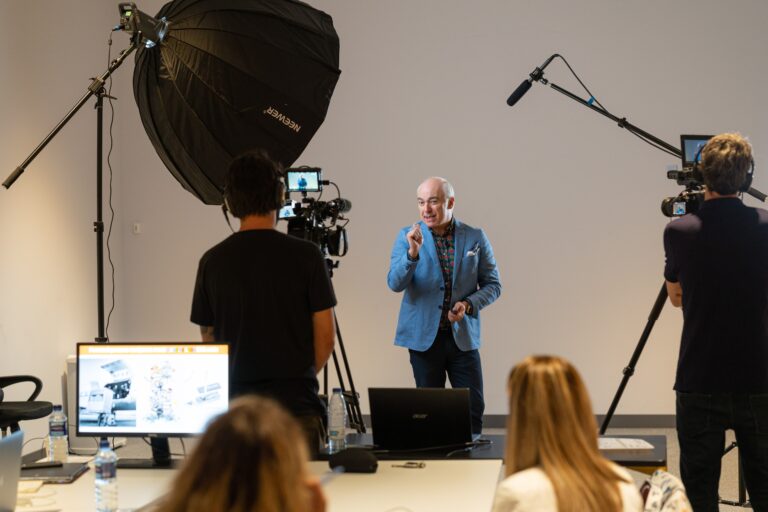





















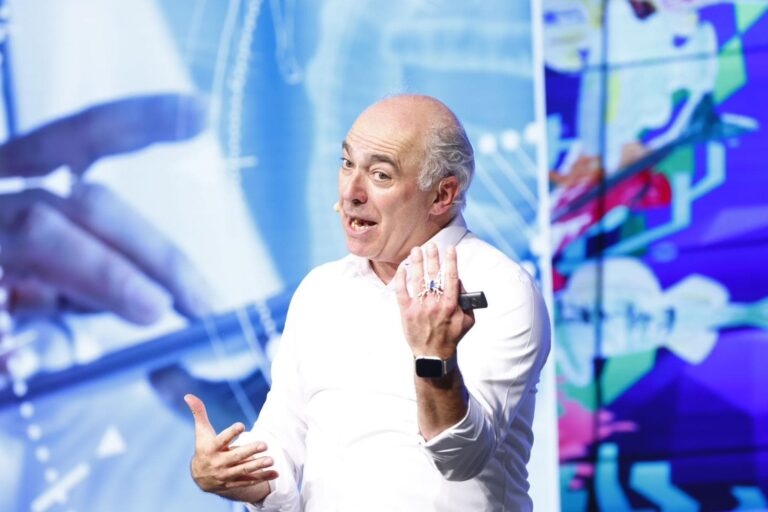
My eye-opener talk on the Future of healthcare

Zorgidee 2013, Hasselt, Feb 8, 2013

future hc

The future of healthcare: it’s no longer about being sick, but about staying well & healthy. We have entered the ages of Genomic medicine and Self monitoring which will lead to healthcare which becomes consumer-driven, engaging, addictive, fun and social.

Personalized/Precise, Participatory, Predictive & Preventive medicine will not merely treat disease, but will rather maintain our wellness, via the use of our personal genome and other biomarkers, mobile gadgets & Apps, social media & games.

What are some of the best visualizations or maps of future trends?

1. Envisioning the future of health technology

2. An Interactive Infographic Maps The Future Of Emerging Technology

View Answer on Quora

My TEDx talk on Dealing with your personal genome

TEDx Flanders (Antwerp, October 20, 2012)

Access to our biological code, our genome, will soon become a commodity. But what can we do with it – what would we like to do with it – how could we deal with it – and would it make us … better?

While it took more then 10 years to generate a first, single blueprint of our biological code (our genome), technological advances now allow to generate the same data in just a few days at hardly a cost – soon in devices the size of our smartphone, and accessible at all time.

The greatest impact of this has been in our understanding of cancer as a genetic disease and in the development of new ways to treat patients tailored to their genome. Newer developments promise to use the same approaches to scan our next generation baby’s – by simply pricking a drop of blood of their pregnant mother to be.

In parallel, we are trying to understand not only how our genomes, with the help of some other -omes predispose us to disease, but more importantly, how they keep us healthy. While novel, almost daily findings extend our knowledge – little of this knowledge is actionable. Or is it? And would we be willing to act upon it? Two major tweaks, extensions to our genome knowledge promise to make the difference – and for sure will require some introspection.

What are some of the most interesting charts having more than 3 variables?

This is the first iPOP, an integrated Personal Omics Profile, an analysis that combines genomic, transcriptomic, proteomic, metabolomic,
and autoantibody profiles from a single individual over a 14 month period.

From outer to inner rings: chromosome ideogram; genomic data (pale blue ring), structural variants >50 bp (deletions [blue tiles], duplications [red tiles]), indels (green triangles); transcriptomic data (yellow ring), expression ratio of HRV infection to healthy states; proteomic data (light purple ring), ratio of protein levels during HRV infection to healthy states; transcriptomic data (yellow ring), differential heteroallelic expression ratio of alternative allele to reference allele for missense and synonymous variants (purple dots) and candidate RNA missense and synonymous edits (red triangles, purple dots, orange triangles and green dots, respectively).

From Chen et al., Cell 148, 1293–1307, 2012

View Answer on Quora

What are the foreseeable medical and pharmaceutical breakthroughs for the next decades?

First of all start with a thorough overview of the ‘20 Great Challenges of health and medicine’ as defined by TEDMED. The Great Challenges are defined as persistent problems that have medical and non-medical causes, impact millions of lives, and affect the well-being of all of us. TEDMED’s goal is to provide a meaningful engagement platform, resulting in a thought-provoking resource that can inspire new and innovative approaches: http://challenges.tedmed.com/greatchallenges/index

Then (video) look to
1. Daniel Kraft (physician-scientist, inventor, FutureMed program at Singularity University) on innovations in medicine, powered by new tools, tests and apps that bring diagnostic information right to the patient’s bedside: http://www.ted.com/talks/daniel_kraft_medicine_s_future.html

2. Microsoft’s Future Vision Healthcare: http://mydocumentarys.com/video/4U5MKUGM82K4/Microsoft-Future-Vision-Healthcare-2012

3. IBM’s supercomputer Watson use in healthcare: http://www-03.ibm.com/innovation/us/watson/watson-for-a-smarter-planet/industry-perspectives/healthcare.html

4. A topic on 3D printing the desktop drugstore: http://www.bbc.com/future/story/20120926-desktop-drugstores

5. A visual guide to health care innovation which takes you through some of the companies, startups, and organizations that are working on improving every aspect of the health experience: http://healthydoseofimagination.com/

6. And check out a nice infographic from Misfit Wearables (http://www.misfitwearables.com/) depicting how the digital revolution will create better healthcare:

View Answer on Quora

Are there any online dating sites that match people based upon genetic, organ, or marrow compatibility?

Incidently, the UK Telegraph just ran a (rather generic) article titled ‘DNA gene testing will screen out lovers’: Couples will soon be able to choose their life partner solely based on the compatibility of their genes instead of through love, a scientific conference has heard. See http://www.telegraph.co.uk/scien…

Second, it is well known that a number of often fatal genetic diseases disproportionately strike Ashkenazi Jews (Jews descended from ancestors in Eastern and Central Europe). These diseases are autosomal recessive genetic disorders, which means that both the mother and the father have to have the gene for the disease in order for their child to have the disease.
In 1995, Tay-Sachs disease was the only genetic disease prevalent among Ashkenazim for which screening was available. Today, tests are available for 19 chronic conditions that are known as Jewish genetic diseases. Testing capabilities have risen dramatically: just one year ago, individuals could be tested for 16 conditions; in 2009, the number was 11. Among those conditions, in addition to Tay-Sachs, are cystic fibrosis, Gaucher disease, Canavan diseas, Niemann-Pick disease, Fanconi anemia, and Gaucher disease.
Organizations dealing with Jewish genetic diseases are intensifying their efforts to educate Ashkenazim of childbearing age about the need to be screened for all 19 conditions with a single blood test, and to update tests that have already been conducted.

Therefore, look for instance to http://www.sawyouatsinai.com/jew…

Finally, I guess you should be ‘aware’ of

1.      ScientificMatch: they got lot of attention when they launched – their website is down now (!?), but you find some info here: http://en.wikipedia.org/wiki/Sci…

2.      GenePartner: http://www.genepartner.com/

The Economist had a good article describing their principle (going back to a T-shirt sniffing experiment). The actual genetic translation however has not been proven yet. See http://www.economist.com/node/10…

An excerpt: In his original study, a Swiss researcher, Dr Wedekind recruited female volunteers to sniff men’s three-day-old T-shirts and rate them for attractiveness. He then analysed the men’s and women’s DNA, looking in particular at the genes that build a part of the immune system known as the major histocompatability complex (MHC). Dr Wedekind knew, from studies on mice, that besides fending off infection, the MHC has a role in sexual attractiveness. It changes odours in ways the mice can detect (with mice, the odours are in the urine), and that detection is translated into preferences for particular mates. What is true for mice is often true for men, so he had a punt on the idea that the MHC might affect the smell of human sweat, as well.
It did. Women preferred T-shirts from men whose MHC was most different from their own. What was more, women with similar MHCs favoured the use of similar commercial perfumes. This suggests that the role of such perfumes may be to flag up the underlying body scent rather than mask it, as a more traditional view of the aesthetics of body odour might suggest.
That makes evolutionary sense. The children of couples with a wide range of MHC genes, and thus of immune responses, will be better protected from disease. As the previous article suggests, that could be particularly important in a collaborative, group-living species such as humanity. Moreover, comparing MHCs could be a proxy for comparing kinship, and thus help to prevent inbreeding.

Are there any online dating sites that match people based upon genetic, organ, or marrow compatibility?